Bianca Sullivan · 5 October 2026
Svalbard Aurora Records Reveal Unexpected Links Between Atmospheric Events and Microplastic Deposition Patterns in Remote Snow Layers
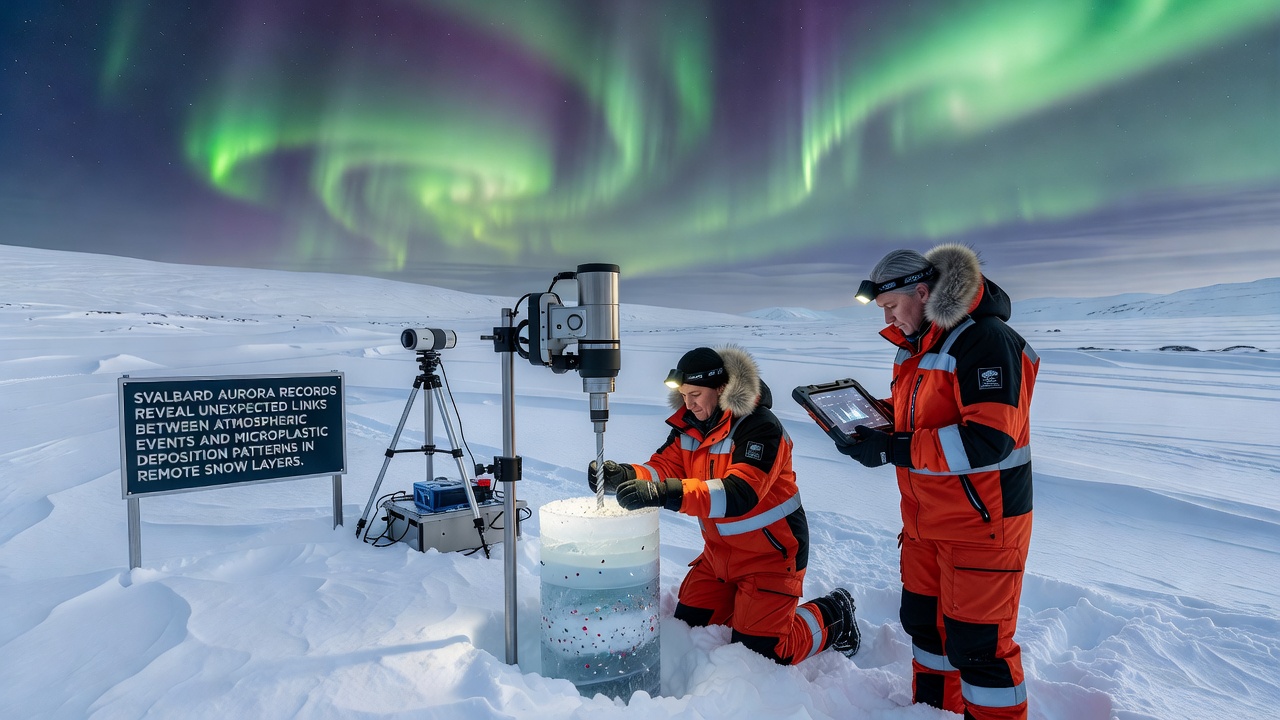
Researchers examining ice cores and snow strata from Svalbard have identified correlations between historical aurora intensity records and layers containing elevated microplastic concentrations, and these patterns point to atmospheric dynamics that carry particles across long distances before they settle in polar regions. Data collected over multiple field seasons shows deposition peaks that align with documented geomagnetic storms and solar particle events rather than following steady seasonal trends alone.
Aurora Observations as Proxies for Atmospheric Transport
Teams operating in Svalbard have compiled aurora sighting logs dating back several decades alongside continuous instrumental measurements of geomagnetic activity, and these datasets reveal that periods of heightened auroral displays coincide with increased particle flux from the upper atmosphere downward. Observers note that solar wind interactions disturb the magnetosphere in ways that enhance vertical mixing, allowing aerosols and fine particulates to descend more rapidly into the troposphere where precipitation can capture them.
Studies conducted by institutions such as the Norwegian Polar Institute demonstrate that snow layers corresponding to strong auroral years contain microplastic fibers and fragments at rates several times higher than background levels recorded during quieter solar periods. The mechanism appears tied to changes in jet stream behavior and polar vortex stability that accompany these events, which together create pathways for material originating from mid-latitude industrial zones to reach the archipelago.
Microplastic Profiles in Layered Snow Deposits
Analysis of snow pits dug at multiple elevations across Svalbard shows distinct stratigraphic markers where microplastic abundance spikes, and chemical fingerprinting indicates the particles match polymers commonly used in packaging, textiles, and industrial coatings. Researchers have traced these signatures to source regions thousands of kilometers away, confirming that long-range atmospheric transport rather than local activity accounts for most of the accumulation.
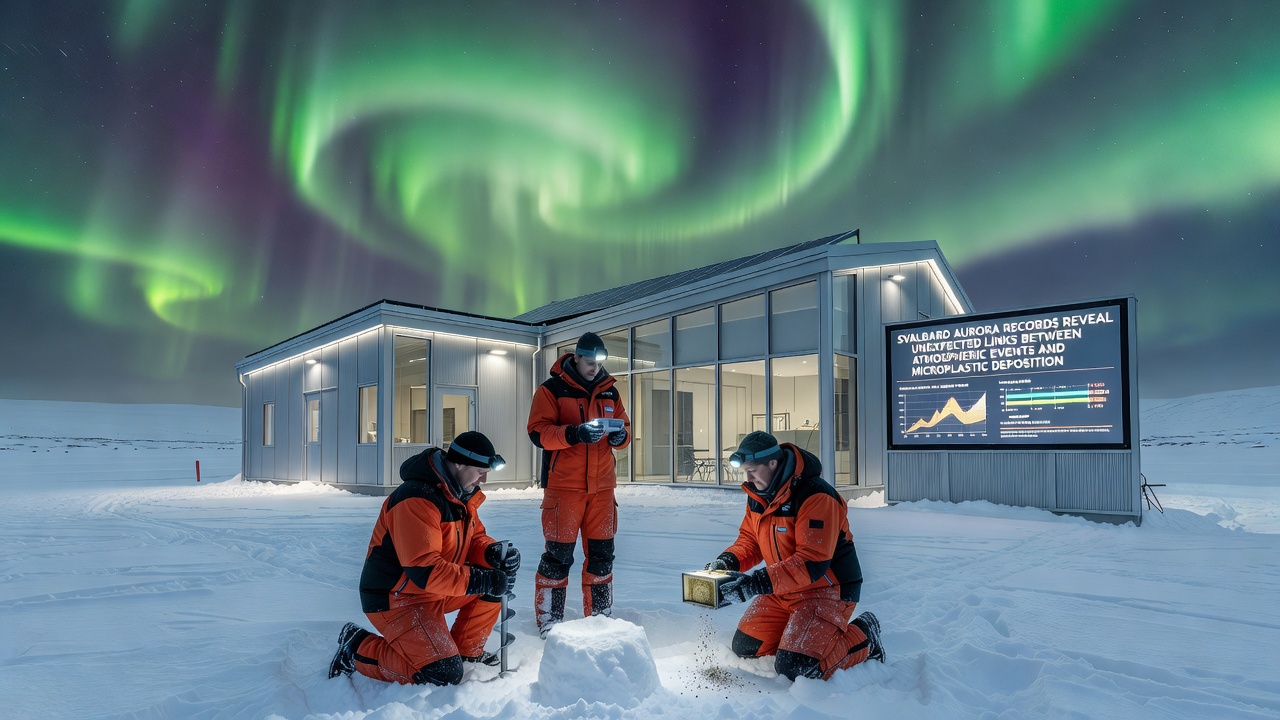
October 2026 marks the scheduled release of an expanded dataset combining new core samples with refined aurora reconstructions, and preliminary summaries already indicate that deposition events cluster around documented geomagnetic disturbances rather than random weather variability. This timing allows integration with global atmospheric models that incorporate both solar forcing and pollutant dispersal pathways.
Connecting Geomagnetic Activity to Particle Deposition
Atmospheric scientists have mapped how coronal mass ejections trigger chain reactions that alter high-altitude wind patterns, and these shifts facilitate the downward movement of suspended microplastics that would otherwise remain aloft longer. Evidence from coordinated monitoring stations shows that following major solar events the concentration of airborne particulates in the lower stratosphere decreases while surface deposition in polar areas rises measurably within days to weeks.
One research group tracked a specific geomagnetic storm in 2022 and found corresponding microplastic layers in snow that fell shortly afterward, with particle counts matching model predictions based on upper-atmosphere circulation changes. Such case studies illustrate how auroral records serve as reliable chronological anchors for dating deposition episodes that might otherwise lack clear temporal markers.
Broader Patterns Across Arctic Monitoring Networks
Comparable findings from other high-latitude sites reinforce the Svalbard observations, and data compiled through international programs indicate that microplastic influx varies systematically with solar cycle phases. The US National Oceanic and Atmospheric Administration maintains complementary records of atmospheric composition that align with the deposition timelines established in Svalbard, providing cross-validation from independent instrumentation networks.
Researchers continue to refine sampling protocols to distinguish between direct atmospheric fallout and minor contributions from sea spray or wind redistribution, yet the dominant signal remains tied to large-scale transport events. These efforts rely on high-resolution dating techniques that combine isotopic analysis with the auroral chronologies to pinpoint exact deposition windows.
Conclusion
Continued monitoring through 2026 and beyond will test whether the observed correlations hold across additional solar cycles, and expanded datasets should clarify the relative contributions of different atmospheric pathways. The integration of aurora records with microplastic measurements offers a novel method for reconstructing past transport events while improving forecasts of future deposition under varying solar and climatic conditions.