Bianca Sullivan · 19 October 2026
Subantarctic Penguin Populations Offer Clues to Unprecedented Sea Ice Reductions in the Southern Ocean
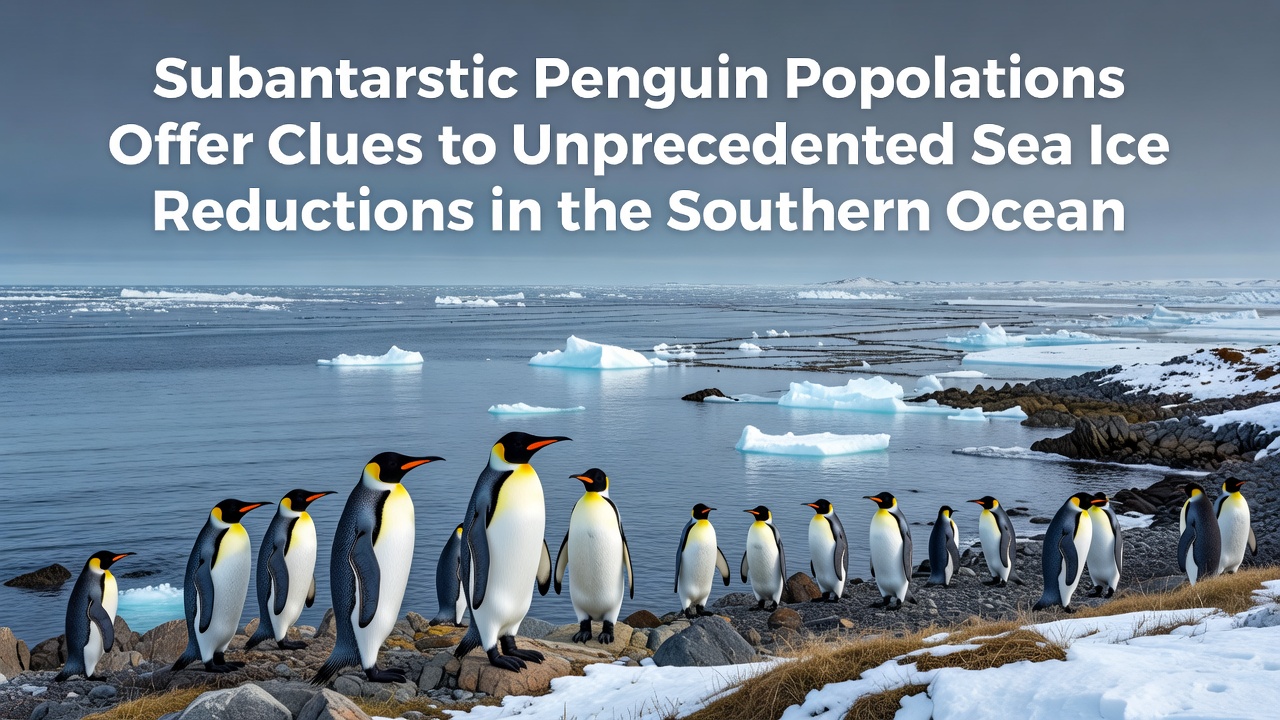
Subantarctic penguin populations have drawn attention from researchers tracking environmental shifts across the Southern Ocean, where sea ice extent has reached record lows in recent years. These birds, including species such as gentoo and chinstrap penguins, rely on seasonal ice patterns for foraging and breeding cycles, which makes their numbers a useful indicator for changes in ocean conditions. Data collected through long-term monitoring programs show correlations between population movements and ice coverage reductions that began accelerating after 2015.
Sea Ice Trends and Penguin Responses
Sea ice in the Southern Ocean typically peaks during the austral winter and retreats through spring and summer, yet satellite records from agencies like the National Snow and Ice Data Center document an overall decline of more than 2 million square kilometers since the early 2010s. Penguins adjust their colony locations and chick-rearing timelines when ice forms later or melts earlier than historical averages, according to surveys conducted by field teams operating from bases on islands such as South Georgia and the South Orkney archipelago. These adjustments appear in breeding success rates that fluctuate with the availability of krill, a primary food source concentrated near ice edges.
Observers note that gentoo penguins have expanded some breeding sites southward while chinstrap colonies in certain areas have contracted, patterns documented in reports spanning multiple seasons. The shifts coincide with periods of reduced ice that limit access to productive feeding zones, forcing adults to travel farther during chick-rearing months. Researchers from institutions including the Australian Antarctic Program have compiled these observations into datasets that align penguin distribution maps with ice concentration measurements taken at regular intervals.
Monitoring Efforts Through 2026
By October 2026, updated satellite imagery and ground counts revealed further reductions in winter sea ice formation across the Weddell and Ross Seas, prompting additional surveys of subantarctic colonies. Teams deployed remote cameras and conducted direct counts that captured how breeding pairs responded to delayed ice advance, with some colonies showing earlier fledging dates as a result. These findings build on earlier work that linked similar ice anomalies to changes in krill biomass measured through acoustic surveys.
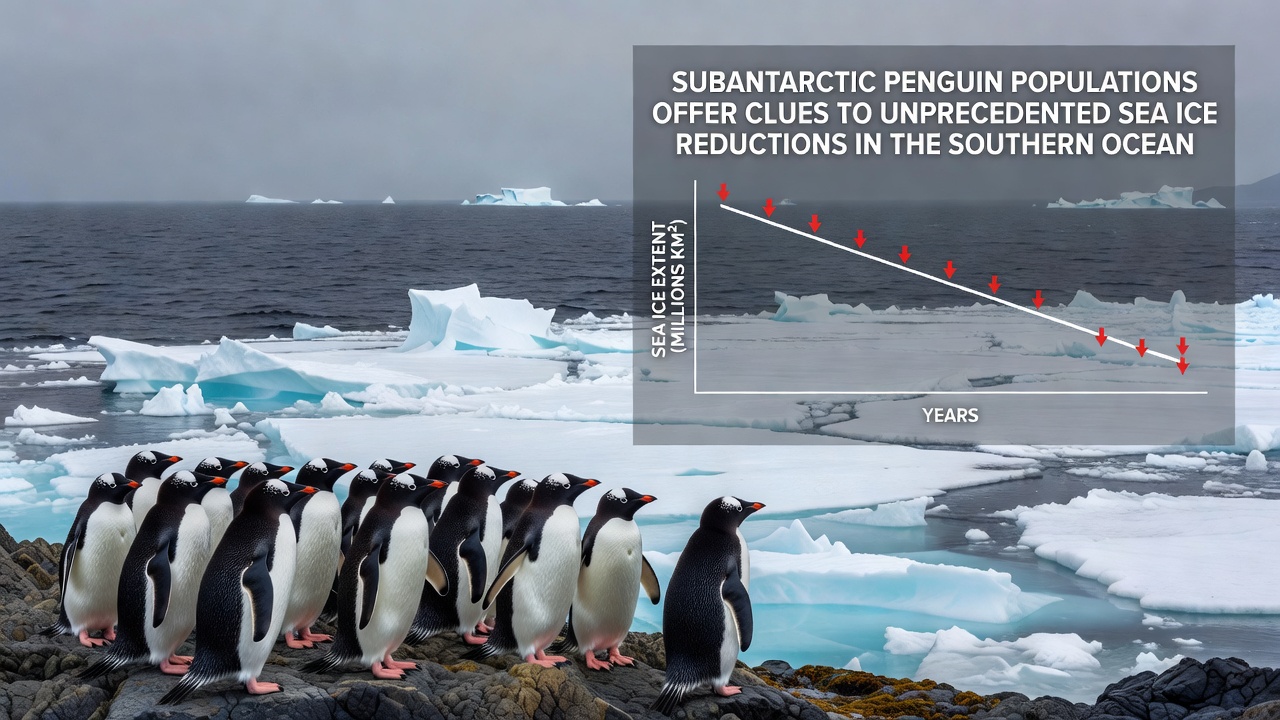
Population data gathered during this period indicate that certain subantarctic sites experienced 10 to 20 percent declines in breeding pairs compared with averages from the previous decade, while other locations maintained stable numbers when local ice conditions remained closer to long-term norms. The variation across sites helps isolate the influence of sea ice from other factors such as predation or human disturbance, because monitoring protocols standardize for these variables. British Antarctic Survey records provide one source for cross-referencing these colony-level changes with regional ocean temperature profiles.
Linking Population Data to Broader Ocean Changes
Analysis of penguin foraging tracks obtained through GPS tags shows increased travel distances during years of low ice cover, which raises energy demands on breeding adults and affects chick survival rates. These behavioral adjustments serve as real-time indicators that complement physical measurements of ice thickness and extent collected by research vessels. Scientists integrate the two data streams to refine models that project future conditions under continued warming trends observed in the Southern Ocean.
Studies published through academic networks have compared penguin census figures from the 1980s onward with reconstructed sea ice histories derived from satellite and proxy records. The comparisons highlight how subantarctic species act as sentinels because their life cycles intersect directly with the marginal ice zone where productivity peaks. When ice retreats beyond a threshold, foraging efficiency drops and population metrics reflect the pressure within one or two breeding seasons.
Conclusion
Subantarctic penguin monitoring continues to supply detailed records that align with independent measurements of Southern Ocean sea ice, offering a biological perspective on physical changes unfolding across the region. Continued data collection through established programs supports ongoing assessment of these connections without requiring new infrastructure. The patterns observed through 2026 extend an existing body of evidence that ties colony dynamics to ice variability on seasonal and interannual scales.