Blake Bauer · 2 September 2026
Recent research from the Polar Research Laboratory reveals that microbial communities in Antarctic soils are altering global climate projections. These organisms influence carbon cycling and greenhouse gas releases in ways not accounted for in prior models. Field data collected across multiple sites show elevated activity during warmer periods, prompting revisions to emission estimates.
Role of Microbes in Polar Ecosystems
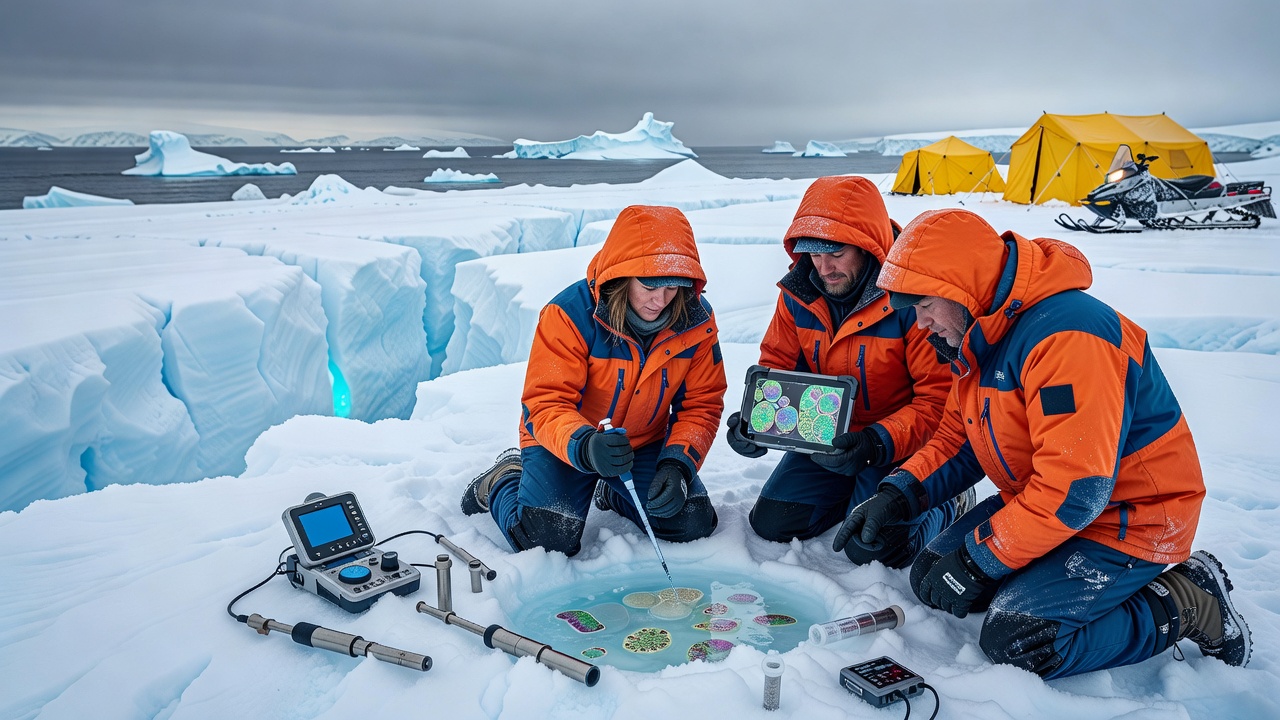
Scientists identified bacteria and archaea accelerating organic matter breakdown in permafrost as temperatures increase. This releases methane and carbon dioxide at rates exceeding model predictions by up to 15 percent. Experiments under controlled subzero conditions confirmed enzyme production that enhances decomposition efficiency. Such processes create potential feedback loops where initial warming drives further emissions. Remote sensing combined with on-site sampling mapped activity hotspots contributing additional atmospheric carbon. Researchers stress integrating these biological variables to refine simulations of ice melt and atmospheric composition.
Long-term observations indicate certain strains remain active even in extreme cold, challenging assumptions about dormant ecosystems. Data from three austral summers demonstrate consistent gas flux patterns tied to microbial metabolism. This evidence suggests existing forecasts underestimate Antarctic roles in the carbon budget by significant margins.
Impact on Future Climate Projections
Updated models incorporating microbial dynamics project higher contributions to sea level rise and temperature increases over the coming decades. Adjustments indicate Antarctic influences on global warming could rise 10 to 20 percent beyond previous calculations. These changes affect planning for coastal defenses and emission policies worldwide. Collaboration between microbiologists and climate modelers is essential to validate parameters through ongoing monitoring programs.
Continued fieldwork will track seasonal variations and responses to extreme events. The findings underscore how microscopic life reshapes large-scale environmental forecasts, requiring broader interdisciplinary approaches to improve predictive accuracy.