Bianca Sullivan · 2 September 2026
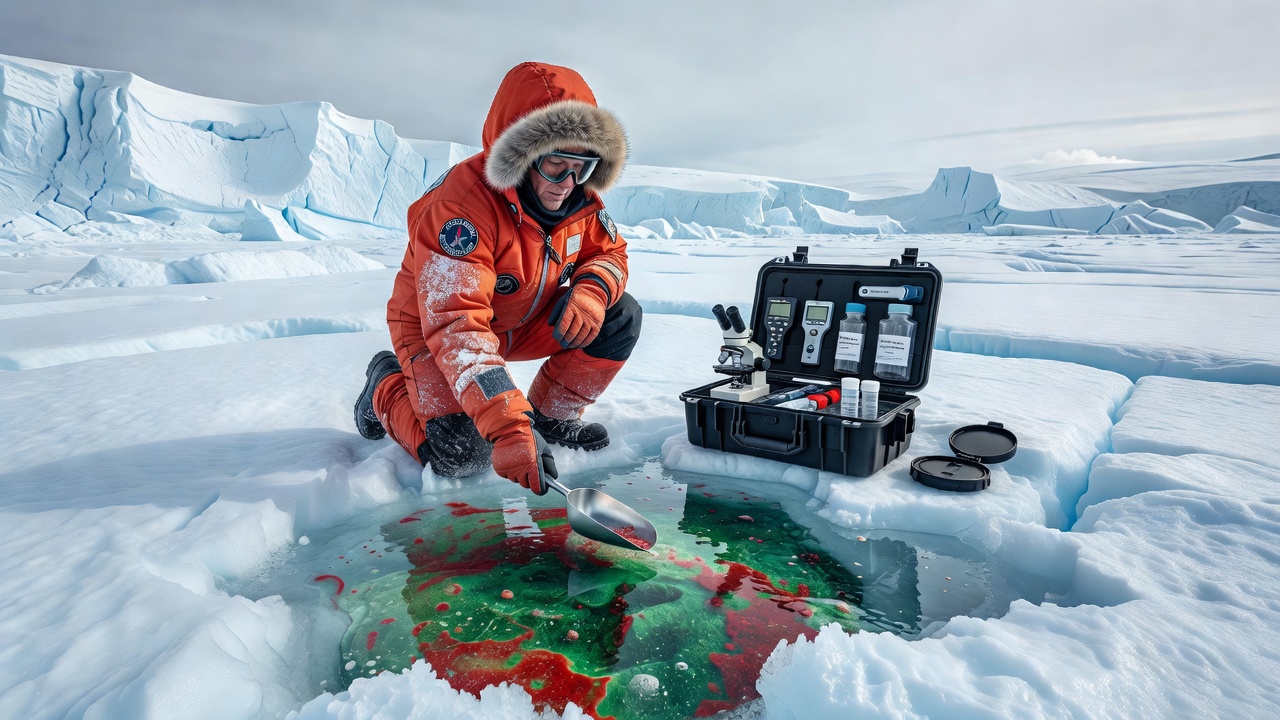
Recent findings from the Polar Research Laboratory indicate that microbial communities in Antarctic soils are playing a more significant role in greenhouse gas emissions than previously estimated. These tiny organisms, thriving in the harsh polar environment, are contributing to changes in local carbon cycles that could influence global climate predictions. The study involved multidisciplinary teams examining both terrestrial and subglacial environments.
Discovery of Microbial Activity
Scientists at the laboratory collected samples from various sites across the Antarctic Peninsula over a period of three years. Analysis revealed high levels of methanogenic bacteria capable of producing methane under permafrost conditions. This discovery challenges earlier assumptions that Antarctic regions were negligible sources of this potent greenhouse gas. The microbes appear to be activated by rising temperatures, leading to increased emissions as ice melts and exposes more soil. Detailed measurements showed emission rates up to ten times higher than model predictions in some areas.
Further studies showed that these bacteria interact with other microbial species to enhance decomposition rates of organic matter trapped in the ice. Researchers used advanced genomic sequencing to identify the specific strains involved. Their activity is not uniform but varies with moisture levels and nutrient availability in the soil. Seasonal variations also play a role, with summer thaws triggering bursts of activity.
Implications for Climate Models
Current climate forecasting models may need revision to account for these microbial contributions. Incorporating data on Antarctic microbial emissions could lead to higher estimates of future warming scenarios. The Polar Research Laboratory team is collaborating with international climate centers to update predictive algorithms accordingly. This integration requires new parameters for microbial response to temperature changes.
Experts emphasize that while the overall impact might be modest compared to tropical wetlands, the feedback loop created by warming-induced emissions could accelerate regional changes. This includes faster ice sheet retreat and altered ocean currents. Long-term monitoring programs are being established to track these dynamics over the next decade. Data from satellites and ground stations will be combined for comprehensive analysis.
The research underscores the importance of polar ecosystems in the global climate system. Continued investigation into microbial processes will be crucial for accurate forecasting and informed policy decisions on emissions reductions. Future expeditions are planned to explore deeper into the continent's interior where conditions differ significantly.